Everything You Need To Know About Heat Pumps

Discover how heat pump HVAC systems and water heaters can save you money, improve comfort, and reduce your carbon footprint. Learn how these energy-efficient technologies work, who they benefit, and how you can pay for your upgrade.
Key Takeaways
Heating and water heating account for over 50% of a home’s energy use.
Heat pumps offer powerful efficiency, comfort, and air quality benefits.
Flexible financing options make upgrading more affordable for homeowners.
A heat pump is an energy-efficient system that both heats and cools your home by moving heat instead of generating it — often replacing a separate furnace and air conditioner.
Heating and cooling are responsible for more than half of a home’s energy use. If you’re looking to lower utility bills and ways to live more sustainably, switching to a heat pump HVAC system or heat pump water heater is one of the most effective upgrades you can make.
These systems are efficient and low-maintenance, with financing options that make the transition more affordable.
What is a heat pump HVAC system?
A heat pump efficiently heats and cools your home by transferring heat rather than generating it. In winter, it pulls heat from the air or ground indoors; in summer, it pushes warm air out.
Benefits:
Energy Savings: Uses significantly less electricity than traditional HVAC systems, lowering monthly bills.
Healthier Air: Advanced filters improve indoor air quality, which is especially important since Americans spend about 90% of their time indoors.
Environmentally Friendly: Operates without burning fossil fuels, helping reduce carbon emissions.
Comfort & Control: Allows precise temperature control by zone or room.
What Is a heat pump water heater?
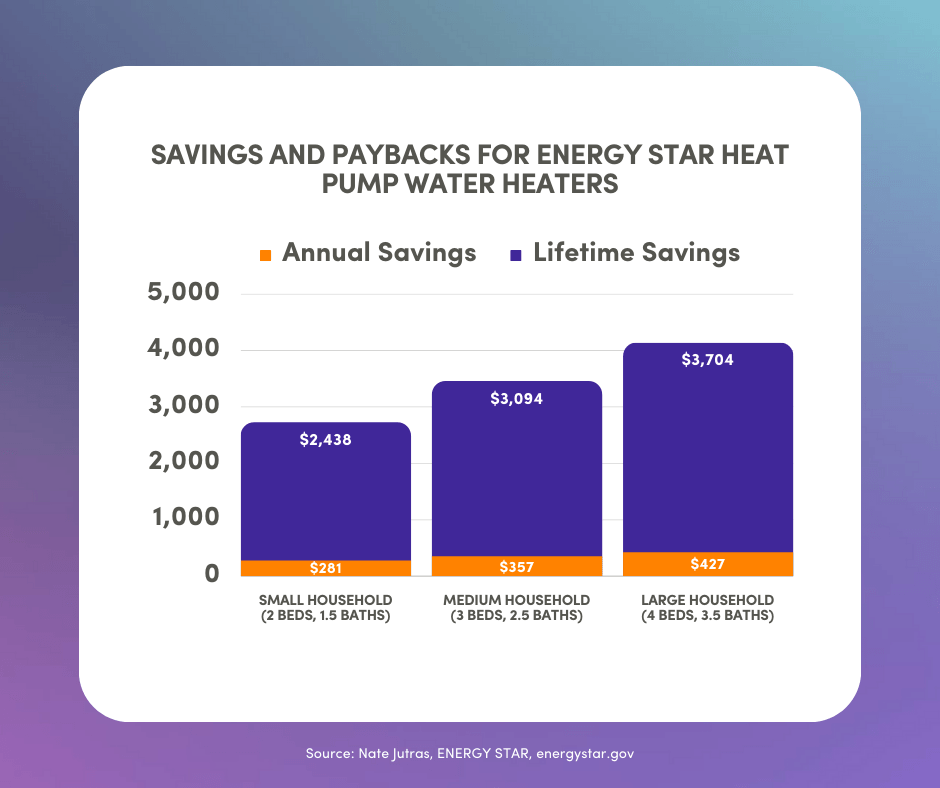
A heat pump water heater (HPWH) pulls warmth from the air around it to heat water, making it up to three times more efficient than a standard electric model.
Benefits:
Lower Energy Bills: Can save a family of four up to $550 annually and $5,610 over its lifetime.
Smart & Reliable: Maintains consistent temperatures and includes built-in smart features for efficiency.
Long Lifespan: Typically lasts 10–15 years, outpacing standard water heaters.
Does a Heat Pump Increase Home Value?
Increasingly, yes. A June 2026 analysis by the Smart Energy Consumer Collaborative, property-data platform 257, and the National Association of Realtors reviewed more than half a million U.S. home sales with ducted heat pumps. Homes whose listings actually mentioned the heat pump sold for roughly 0.6% to 1% more than comparable homes that didn't — about $2,300 to $3,900 on a median-priced home. That can offset 15–25% of the system's typical installed cost.
The catch: most listings don't mention it. The same research found the heat pump was called out in the listing only 8% of the time, largely because many real estate agents aren't yet confident explaining heat pump benefits. For homeowners, that's a good reason to make sure an appraiser or agent knows about the upgrade before a home goes on the market.
Which type of heat pump is right for my home?
The right heat pump depends on your home: ductless mini-splits suit older homes and additions, ducted systems fit homes with existing central air, and cold climates often need a dual-fuel or electric backup.
Ductless (Mini-Split): Great for older homes or additions.
Ducted: Best for homes with existing central systems.
Cold Climates: Supplemental heating may be needed, often paired with dual-fuel or electric backup systems.
Who should get a heat pump?
Heat pumps benefit most homeowners in moderate to cold climates who want lower energy bills, better air quality, and a smaller carbon footprint.
Homeowners in moderate to cold climates who are seeking efficient comfort.
Families looking to improve indoor air quality and lower energy costs.
Anyone aiming to reduce their environmental impact.
Ready to upgrade?
Heat pumps are a powerful way to make your home more efficient, comfortable, and sustainable. Pairing them with solar panels can amplify your energy savings even further.
Looking for other ways to optimize your home’s energy use? Learn about other ways to lower your utility bills.
Frequently Asked Questions
Can heat pumps work with solar panels?
Yes. Heat pumps can be powered by solar panels, which can further reduce energy costs and environmental impact.
Are heat pumps suitable for all climates?
Heat pumps work well in most climates, but in very cold areas, supplemental heating (like a dual-fuel system) may be needed to maintain comfort during extreme temperatures.
How much does a heat pump system cost?
Costs vary based on home size, system type, and installation requirements.
Heat Pump HVAC System: $3,000–$10,000 installed for smaller or ductless systems; whole-home ducted systems commonly run higher, averaging around $15,400 installed in 2026, according to energy marketplace EnergySage.
Heat Pump Water Heater: $1,500–$3,000 installed.
Does installing a heat pump affect home value?
It can. Recent research shows homes that mention a heat pump in their real estate listing tend to sell for a small premium — enough to recoup a meaningful share of the installation cost. See the full breakdown above.
How do I pay for a heat pump?
You can pay for a heat pump with cash, savings, or financing — GoodLeap offers financing through participating contractors to spread the cost over time
Can heat pumps improve air quality?
Yes. Many heat pumps use advanced filtration to remove dust, allergens, and other pollutants, which is especially important since Americans spend around 90% of their time indoors.