Ways to Pay for Your HVAC Upgrade

When it's time to upgrade your HVAC, knowing how you’ll pay matters. This guide walks through your payment options and a simple decision tree to help you choose the right path forward when the unexpected happens.
Key Takeaways
HVAC replacements often happen unexpectedly, making payment planning essential.
Homeowners can choose to pay with cash savings or spread payments over time with a loan or lease.
Understanding your payment options can help make an unexpected upgrade more manageable.
When they need to replace their HVAC system, one of the first questions homeowners ask themselves is, “How am I going to pay for this?”
Your HVAC system keeps your home comfortable year-round and helps support daily life at home, but HVAC issues often come at unexpected times, which makes planning how to pay for a replacement just as important as choosing the right system.
In fact, more than half of U.S. homeowners say they would need to use financing or payment plans to cover an unexpected major home repair, according to data from the Federal Reserve. That reality is why understanding your payment options ahead of time can make an unplanned upgrade feel more manageable.
How Should You Pay for Your HVAC Upgrade?
There are several ways to pay for a new HVAC system, designed to fit different budgets and homeowner priorities. Some homeowners prefer to use savings and cover the cost upfront, while others choose to spread payments over time through an HVAC Loan or an HVAC Lease to preserve savings and maintain flexibility for other priorities.
To make it easier, we’ve created a simple decision tree to guide you through the options and help you identify which approach may be the best fit.
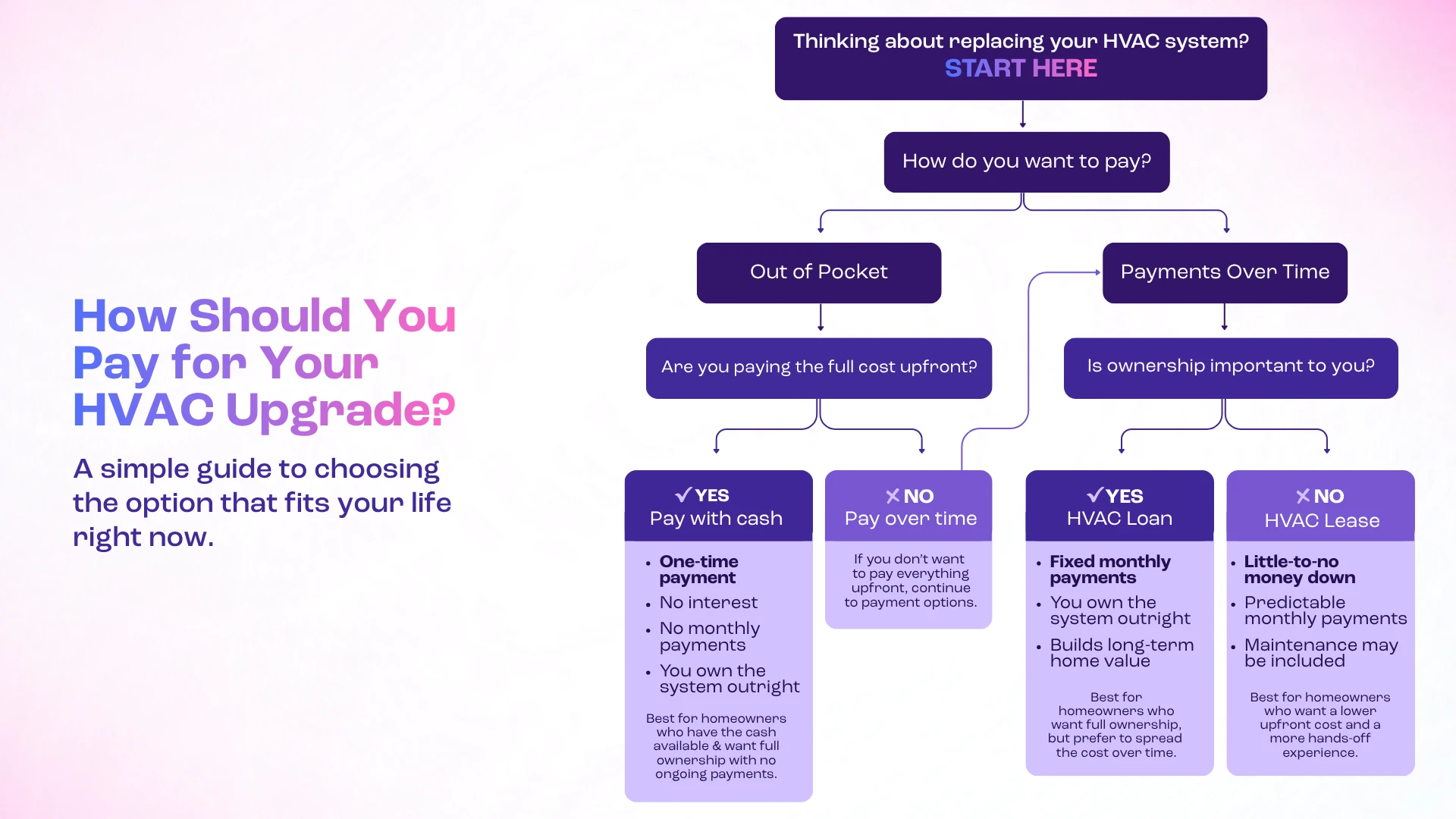
Which HVAC Payment Option Is Right for You?
There’s no single “right” way to pay for an HVAC upgrade. The best option depends on your budget, how long you plan to stay in your home, and what matters most to you right now, whether that’s ownership, flexibility, or ease of maintenance.
Understanding these options can help you move forward with confidence, even when an upgrade wasn’t planned.
Not sure if you need an upgrade?
Start by understanding your system’s condition: 8 Signs It’s Time to Upgrade Your HVAC.