
What Is an HVAC Lease and How Does It Work?

When your HVAC system fails unexpectedly, leasing can provide fast access to a new, energy-efficient system with little to no upfront cost. Learn how HVAC leasing works, what’s included, and how it compares to loans or paying cash so you can choose the option that fits your budget and preferences.
Key Takeaways
HVAC leasing typically involves monthly payments with low or no upfront cost.
Maintenance and repairs may be included, depending on the lease terms.
Leasing provides access to the latest HVAC technology without long-term ownership.
HVAC replacements often happen unexpectedly. When a system fails, homeowners may need to decide quickly how to pay for a new, energy-efficient HVAC system. Understanding the differences between payment options can help support a more informed decision.
Similar to leasing a car, you make monthly payments to use a new HVAC system rather than owning it.
Contractors: Add GoodLeap’s HVAC Lease to your offerings
Want to offer your customers a flexible way to pay for a new HVAC system? Learn more about GoodLeap’s HVAC Lease and how to get started.
How HVAC leasing works
With an HVAC lease, a service provider installs a new heating and cooling system in your home. You pay to use the system over time rather than owning it, making monthly payments over a set term instead of paying for the equipment upfront.
Because heating and cooling account for nearly half of the energy used in a typical U.S. home, according to ENERGY STAR®, many homeowners prioritize keeping their HVAC system efficient and reliable. Leasing can make it easier to access a newer system without taking on full ownership.
With an HVAC lease, you typically get:
Low or no upfront costs
Quick access to a new system
Predictable monthly payments
Maintenance support, depending on the program
The option to upgrade again at the end of the term
When homeowners consider HVAC leasing
Homeowners may consider HVAC leasing based on ownership preference, upfront cost, and responsibility for system maintenance.
An HVAC lease may be a good fit if:
Your system failed unexpectedly
You want to avoid a large upfront expense
You prefer a more hands-off maintenance experience
You like the idea of upgrading as technology improves
Leasing is typically considered by homeowners who prefer not to own the system and want to spread the cost of a new, energy-efficient HVAC system over time.
What to consider before choosing an HVAC lease
Before moving forward, it’s important to understand a few key details:
What’s included in the monthly payment
How long the lease term lasts
What happens when the lease ends
Whether maintenance and repairs are covered
When the terms align with your needs, an HVAC lease can make upgrading easier and more predictable.
How HVAC leasing compares to other options
Leasing is one of several ways homeowners can pay for an HVAC upgrade. Leasing differs from cash and loan options primarily in ownership and responsibility for the HVAC system.
If ownership matters to you, you may want to learn how HVAC loans work.
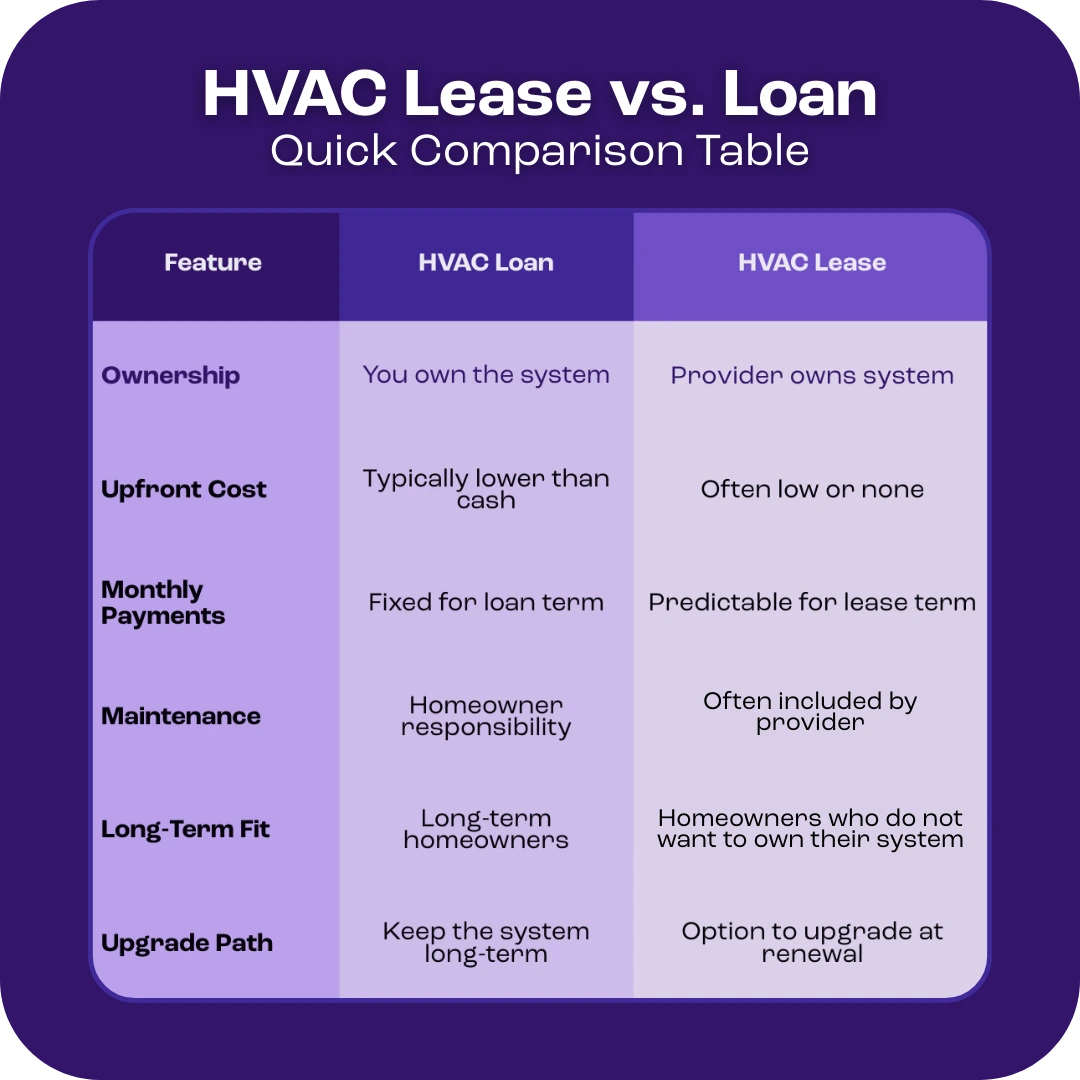
Not sure which option fits your situation?
Choosing between cash, a loan, or a lease depends on your budget, how long you plan to stay in your home, and how involved you want to be in system maintenance.
Use our decision tree to compare cash, loans, and leases so you can move forward feeling informed and confident.
HVAC Leasing FAQs
1. Is HVAC leasing common for homeowners?
Yes. HVAC leasing is an option many homeowners consider when they want predictable monthly payments and lower upfront costs. It’s often considered for unexpected replacements or when homeowners prefer not to own the HVAC system.
2. What does an HVAC lease usually include?
An HVAC lease typically includes the heating and cooling system and installation. Some programs may also include maintenance and repair services, though coverage varies by provider and program.
3. What happens at the end of an HVAC lease?
At the end of the lease term, homeowners may have the option to upgrade to a newer system, renew the lease, or explore other payment options. The exact choices depend on the lease terms and provider.