What Is Cool Roofing and Why Does It Matter?
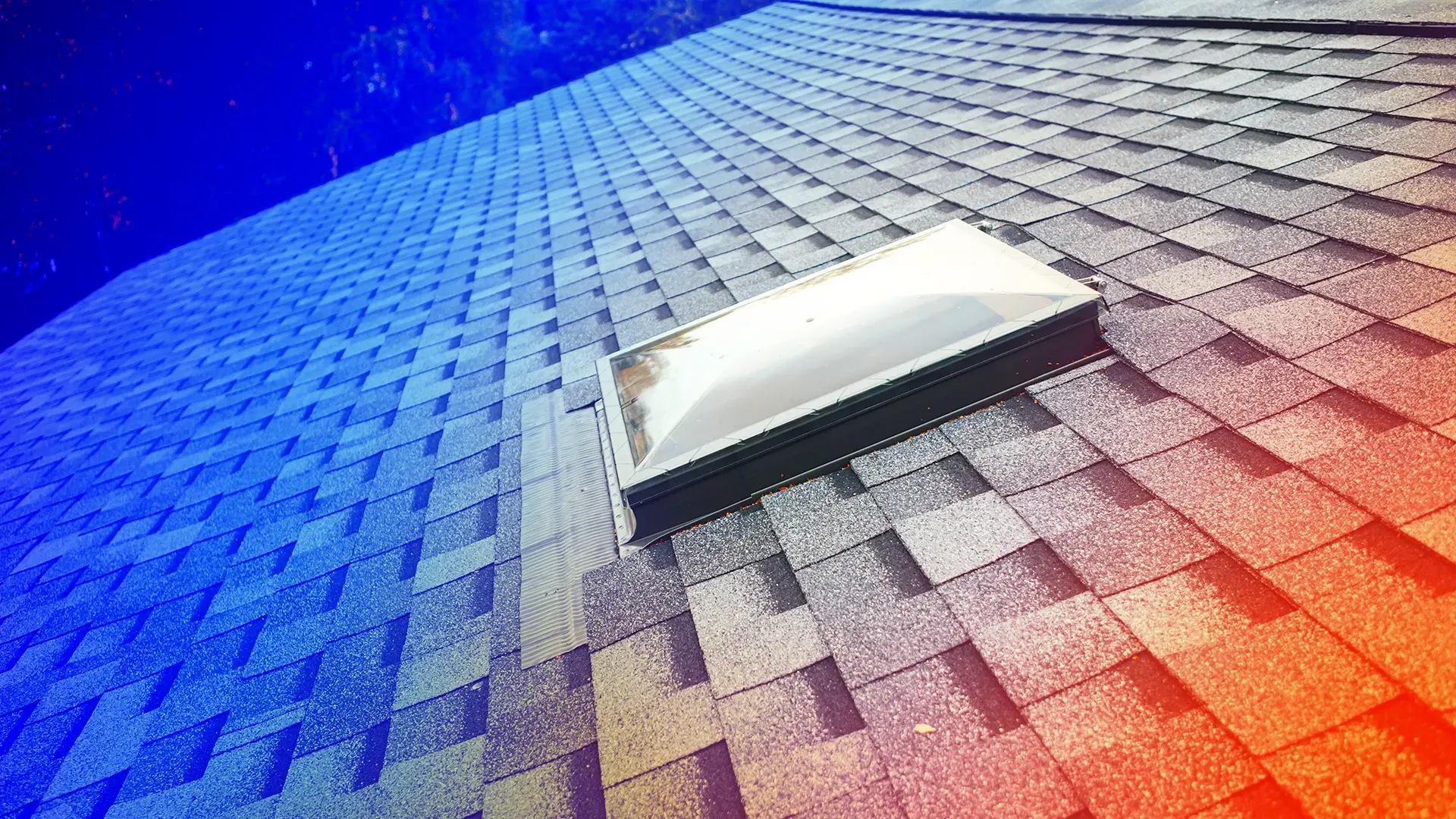
A cool roof reflects more sunlight and absorbs less heat than a standard roof, keeping your home cooler and cutting summer cooling costs by 10–30%, according to the U.S. Department of Energy. It's a smart upgrade for homeowners in sunny or warm climates.
Key Takeaways
Cool roofs reflect sunlight to reduce indoor heat and lower energy bills.
Homeowners can save 10–30% on cooling costs, especially in warm climates.
Eco-friendly roofing option that boosts comfort and cuts long-term HVAC strain.
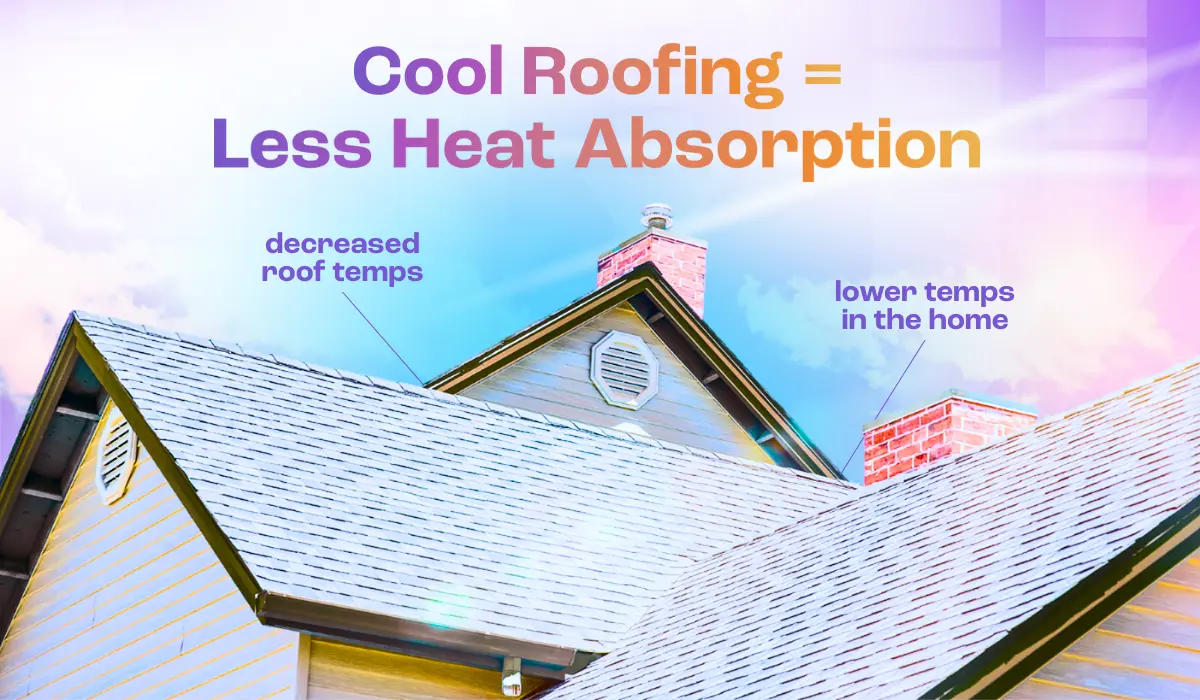
Tired of sky-high summer energy bills? A cool roof reflects sunlight instead of absorbing it, helping your home stay comfortable without overworking your AC.
Unlike traditional roofs that trap heat, cool roofs stay cooler, making them a smart, energy-efficient upgrade for homeowners in sunny or warm climates.
It’s a modern solution that can lower your utility bills, extend your roof’s life, and reduce your environmental impact.
Is cool roofing worth the cost?
Wondering if cool roofing is worth it? The short answer: yes.
While the upfront cost can be slightly higher than a standard roof, cool roofing quickly pays for itself by cutting down on energy costs.
By installing a cool roof, you reduce or eliminate the need for:
Excessive air conditioning during hot months
Frequent HVAC maintenance from overuse
Early roof replacements caused by heat damage
And beyond utility savings, cool roofing helps protect your home, enhances comfort, and adds value—all with minimal lifestyle change.
Financing Tip: Looking to manage upfront costs? Flexible options from providers like GoodLeap make it easier to install a cool roof with little to no money down and low monthly payments.
What are the benefits of a cool roof?
The benefits of cool roofing go far beyond comfort. Once installed, a cool roof helps:
Reflect sunlight and reduce heat absorption
Lower indoor temperatures naturally
Reduce energy use and carbon emissions
Prolong the life of your roofing materials
Cool roofs are available in a wide variety of styles and colors—so you can get performance without compromising on curb appeal.
Cool Roof vs. Traditional Roof: Key Differences
Cool Roof vs. Traditional Roof: Key Differences
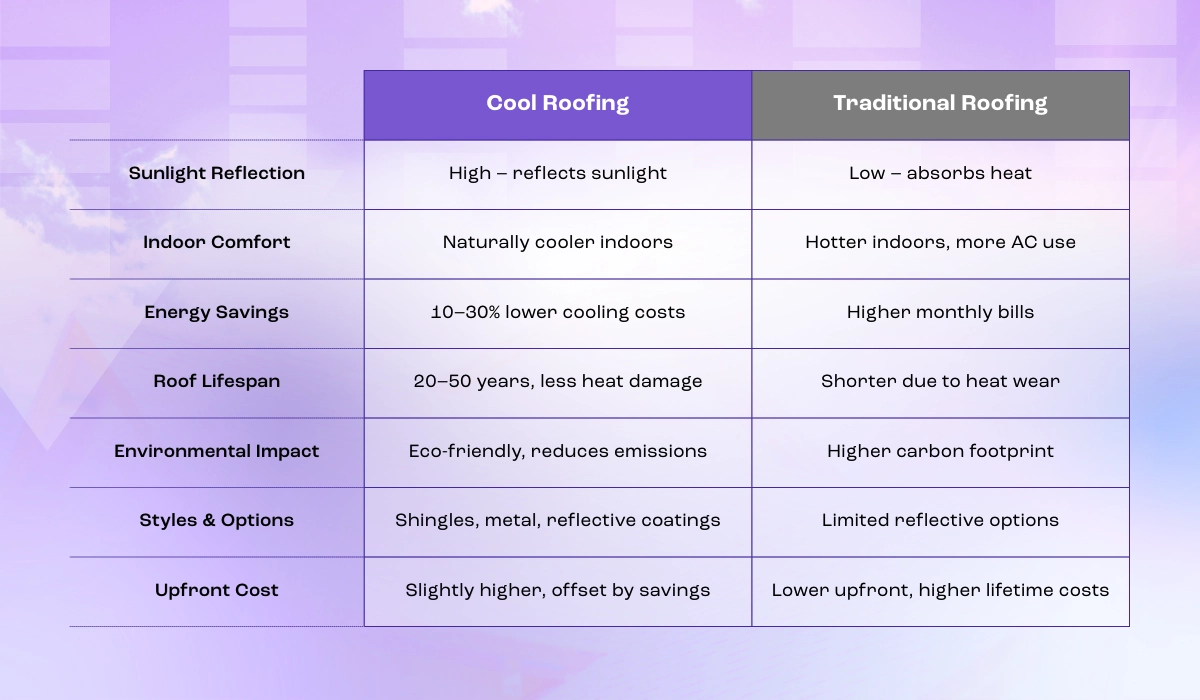
A cool roof reflects sunlight and stays cooler, while a traditional roof absorbs heat and passes it into your home. Here's how they compare:
Cool roof:
Reflects most sunlight instead of absorbing it
Stays significantly cooler — up to about 50°F cooler at the roof surface in peak sun
Keeps indoor temperatures more stable and comfortable in summer
Lowers cooling energy costs by easing the load on your AC
Lasts longer, since less heat means less wear on roofing materials
Slightly higher (or comparable) upfront cost
Lower environmental impact — cuts emissions and helps reduce the urban heat island effect
Traditional roof:
Absorbs most sunlight and heats up significantly
Passes more heat into your home, so your AC works harder
Leads to higher cooling energy costs
Degrades faster under repeated heat exposure, shortening roof life
Standard upfront cost
Higher environmental impact
Is Cool Roofing Right for You?
Cool roofing is ideal for homeowners who want to:
Lower monthly energy bills
Improve indoor comfort in summer
Upgrade or replace an aging roof
Choose a sustainable, eco-friendly solution
Reduce strain on their AC system and HVAC costs
Whether you’re starting a roof replacement project or planning ahead, cool roofing is a smart investment that supports both your wallet and the planet.
Thinking about other energy-efficient home upgrades? Check out our blog on smart thermostats.
Frequently Asked Questions
Is cool roofing a good investment?
Yes. Cool roofs often pay for themselves over time by lowering energy bills and reducing wear on your AC system.
How much money can I save with a cool roof?
The U.S. Department of Energy estimates cool roofs can reduce cooling energy use by roughly 10–30%, depending on your climate, roof type, and home design. Actual savings vary by location and how well your home is insulated.
Can I install cool roofing on an existing home?
Absolutely. You can use cool roofing materials in a full replacement or apply reflective coatings to many existing roof types.
Are cool roofs more expensive?
They can cost slightly more upfront, but most homeowners recoup the cost through energy savings within a few years.
Do cool roofs help the environment?
Yes. They reduce energy usage, help lower urban heat island effects, and cut down on carbon emissions—making your home more sustainable.
What roofing materials qualify as “cool”?
Cool roofing includes reflective shingles, coated tiles, metal roofing, and specialized coatings that reflect sunlight and release heat.
How long does a cool roof last?
High-quality cool roofs typically last 20–50 years, depending on materials, climate, and maintenance.