What Is Whole House Water Filtration? Cleaner Water, Healthier Living, Smarter Homes
A whole house water filtration system delivers clean, safe water from every tap in your home. Learn how it improves water quality, protects appliances and plumbing, and provides long-term savings for your household.
Key Takeaways
Whole house filtration ensures clean water for every faucet, improving health, safety and taste.
Reduce chlorine, lead, and microplastics while protecting appliances from buildup.
Save money and reduce environmental impact by avoiding bottled water and appliance repairs.
A whole house water filtration system cleans all the water entering your home, so every faucet delivers safer, better-tasting water for drinking, cooking, bathing, and more. It protects your health, appliances, and plumbing from harmful contaminants, including emerging concerns like microplastics.
Clean water is essential for everyday life, but the quality of your home’s tap water may not be as pure as it seems. That’s where whole house filtration comes in—offering peace of mind with every drop.
What a Whole House Water Filtration System Does for Your Home
A whole house water filtration system is installed at your main water line, so it filters all the water entering your home—not just what comes from the kitchen faucet. That means cleaner water for every use:
Drinking
Cooking
Bathing and showering
Laundry
Washing hands or brushing teeth
This kind of system treats water at the source and provides consistent protection across your entire home.
What Are the Benefits of Whole House Water Filtration?
Cleaner, Safer Water
Removes common contaminants like chlorine, lead, heavy metals, bacteria, and pesticides—making your water safer for drinking, bathing, and everyday use.
Protection Against Microplastics
A whole house water filtration system helps reduce microplastics in your tap water. These tiny plastic particles, less than 5 millimeters in size, are now commonly found in drinking water worldwide. By filtering water at the source, whole house systems provide protection not just from chlorine, lead, and other contaminants but also from these emerging microscopic pollutants.
Healthier Skin and Hair
Filtered water is gentler on your skin and hair, helping reduce dryness and irritation caused by harsh chemicals and minerals.
Longer Appliance Life
By removing sediment and minerals, filtration systems help prevent buildup in your pipes and appliances—extending the life of your dishwasher, water heater, and washing machine.
Better Taste and Smell
Say goodbye to strange odors or metallic tastes. Filtered water is fresher and more pleasant, straight from the tap.
Convenient and Cost-Effective
Whole house systems work automatically at the source. Over time, they can lower your plumbing and appliance maintenance costs, eliminate the need for bottled water, and reduce how often you need to replace faucet filters.
Looking for other ways to slash energy costs? Learn more here.
Environmentally Friendly
Filtered tap water reduces your reliance on single-use plastic bottles, helping you cut back on waste while protecting your family.
How Does a Whole House Water Filtration System Work?
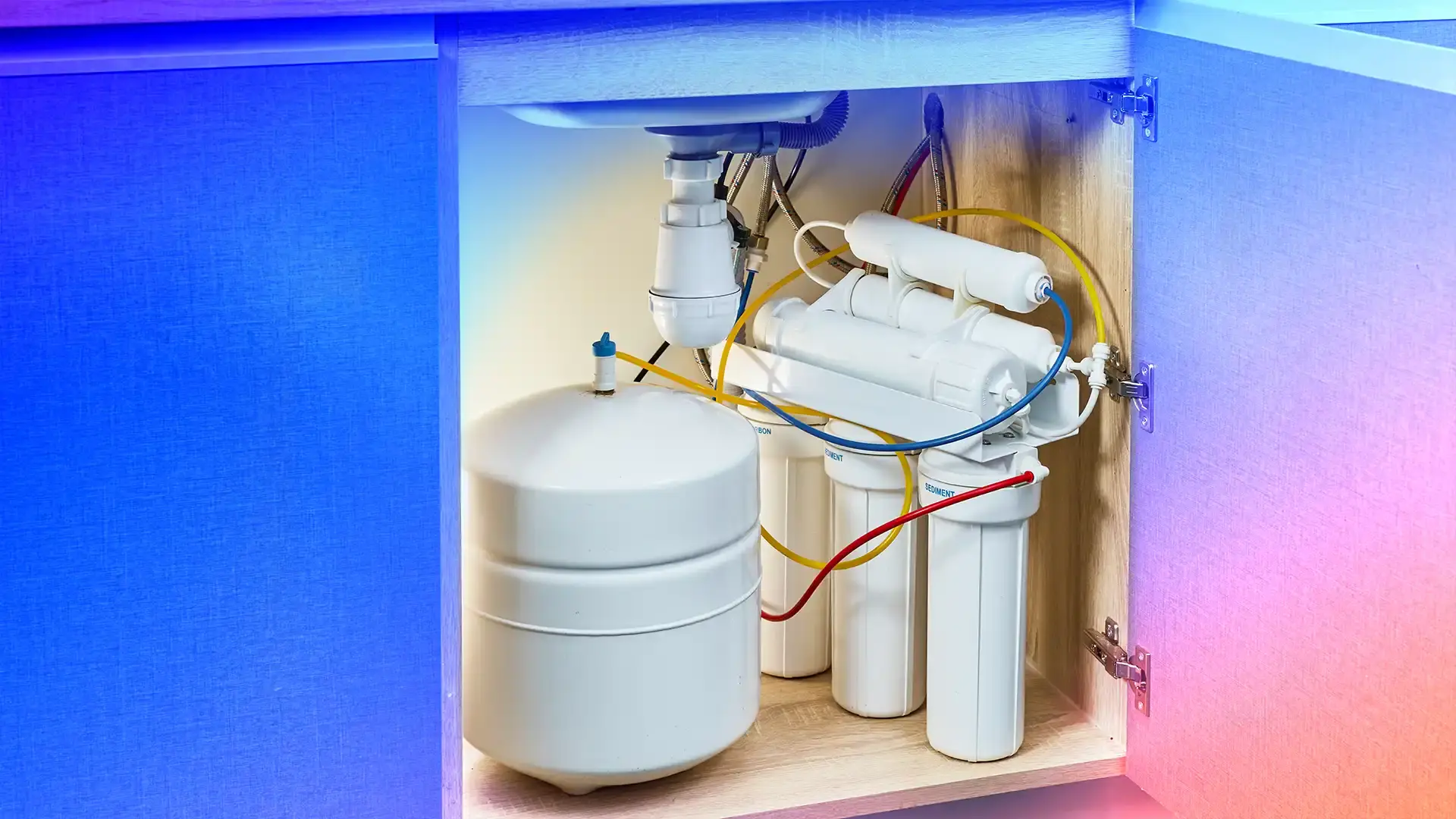
A typical whole house system filters water through multiple stages before it reaches your faucets:
Pre-filter: This removes large debris and particles, such as sediment, from the water before it passes through the main filter.
Main filter: The heart of the system, it removes contaminants like chlorine, heavy metals, pesticides, and other harmful substances from the water.
Post-filter: Some systems include a post-filter that further purifies the water, ensuring that any remaining contaminants are removed before the water reaches your faucets and appliances.
Each stage works together to deliver cleaner, better-quality water throughout your entire home.
How Do You Choose the Right Water Filtration System?
When shopping for a whole house water filtration system, consider these key factors:
Water Quality: Start with a home water test. Knowing which contaminants are in your water helps you select the right system for your needs.
Flow Rate: Make sure the system can keep up with your household’s daily water usage. Larger families or homes with multiple bathrooms may need a higher-capacity unit.
Maintenance Needs: Check how often the filters need to be replaced and how easy the system is to maintain. Some systems require minimal effort, while others need more regular attention.
Who Installs a Whole House Water Filtration System and How Does It Work?
Most whole house water filtration systems are installed by licensed plumbers or certified water treatment professionals. The system is typically mounted near your home’s main water shut-off valve—often in a garage, basement, or utility room.
Installation involves:
Shutting off your home’s main water supply
Cutting into the main water line
Mounting the filtration system and connecting the inlet and outlet lines
Ensuring water pressure and flow rate are properly calibrated
Flushing the system before use
While some DIY-savvy homeowners may attempt installation, hiring a professional is usually recommended to avoid leaks, pressure issues, or voiding the system’s warranty.
Why a Whole House Water Filtration System Is a Smart Investment
Installing a whole house water filtration system improves the overall quality of your home’s water while also protecting your health, appliances, and plumbing. By filtering out harmful contaminants, it delivers clean, great-tasting water from every tap, whether you’re drinking, cooking, or bathing.
And with microplastics increasingly found in municipal water supplies, a high-quality filtration system helps safeguard your family from a contaminant you can’t see but don’t want in your body.
If you’re looking to improve water taste, reduce skin and hair irritation, and avoid costly plumbing repairs, a whole house water filtration system is a smart, long-term upgrade for your home and family.
Interested in making more energy efficient home upgrades for your home? Consider a professional home energy audit to get a detailed assessment of your home’s energy use.